


When it's time to have "the talk"
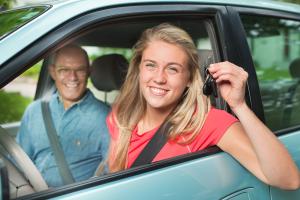
With teen drivers, it is very important to have coachable moments early on to instill safe and responsible habits that will carry throughout their driving.
The Hanover offers some conversation starters for you and your teen.
"Your phone can wait."
According to the Governors Highway Safety Association, drivers who use their phone to talk or text behind the wheel are 240% more likely to crash. Encourage your teens to exercise restraint and avoid using their phones at all while driving.
"Keep your eyes on the road, hands on the steering wheel."
New, inexperienced drivers are more likely to be in an accident. It is important to focus only on driving. When you are first behind the wheel, even actions like using voice controlled features, adjusting the radio or eating can be a distraction.
"Take your time."
Always stop for the total three seconds at stop signs to avoid being cut off, or cutting off other drivers. Be aware of the speed limit at all times.
"Check in."
Before you take the car out, always let someone know where you are going and when you will be back.
"Nothing good ever happens after midnight."
Be extra cautious when driving at night, especially if you are a newer driver. The National Safety Council advises that impaired drivers are most frequently on the road after dark – particularly between the hours of midnight and 3 a.m. on weekends. And, in many states, it's against the law for you to be on the roads during those hours.
"The weather can change in a blink of an eye."
Obviously, the best scenario is for you to be home, and not behind the wheel, if severe weather hits. Nonetheless, it's important how to drive safely in rain and snow. Also make sure your car is equipped with the right tools to drive in these conditions, such as workable windshield wipers, antifreeze and snow brushes.
"Stay organized and know your car."
Keep your insurance card in your vehicle in case you ever get in an accident. It's also a good idea to keep the following items in the vehicle in case the situation arises:
- Spare tire
- Jack
- Tire iron
- Jumper cables
- Reflective triangle or flare
- Tire pressure gauge
- Flashlight
- First aid kit
In addition, be sure to show your teen how to perform minor fixes to your car such as changing a flat tire, jump starting your car or changing your oil.
"Know what to do In Case of Emergency."
In a situation where you are not able to speak, first responders will go to your phone and call contacts listed as "ICE" in order to inform them of the accident, as well as obtain medical information about you. Make sure you have your emergency contacts clearly labeled.
Let's talk safety
We are dedicated to helping our customers feel safe and confident with their teen driver on the road. Talk to your independent agent to learn more about the tools The Hanover offers to help keep your teen driver safe, and save you money as well.
Sources
Governors Highway Safety Association
This material is provided for informational purposes only and does not provide any coverage or guarantee loss prevention. The examples in this material are provided as hypothetical and for illustration purposes only. The Hanover Insurance Company and its affiliates and subsidiaries (“The Hanover”) specifically disclaim any warranty or representation that acceptance of any recommendations contained herein will make any premises, operation or actions safe or in compliance with any law or regulation. By providing this information to you, The Hanover does not assume (and specifically disclaims) any duty, undertaking or responsibility to you. The decision to accept or implement any recommendation(s) or advice contained in this material must be made by you.
Related resources



When it's time to have "the talk"
With teen drivers, it is very important to have coachable moments early on to instill safe and responsible habits that will carry throughout their driving.
The Hanover offers some conversation starters for you and your teen.
"Your phone can wait."
According to the Governors Highway Safety Association, drivers who use their phone to talk or text behind the wheel are 240% more likely to crash. Encourage your teens to exercise restraint and avoid using their phones at all while driving.
"Keep your eyes on the road, hands on the steering wheel."
New, inexperienced drivers are more likely to be in an accident. It is important to focus only on driving. When you are first behind the wheel, even actions like using voice controlled features, adjusting the radio or eating can be a distraction.
"Take your time."
Always stop for the total three seconds at stop signs to avoid being cut off, or cutting off other drivers. Be aware of the speed limit at all times.
"Check in."
Before you take the car out, always let someone know where you are going and when you will be back.
"Nothing good ever happens after midnight."
Be extra cautious when driving at night, especially if you are a newer driver. The National Safety Council advises that impaired drivers are most frequently on the road after dark – particularly between the hours of midnight and 3 a.m. on weekends. And, in many states, it's against the law for you to be on the roads during those hours.
"The weather can change in a blink of an eye."
Obviously, the best scenario is for you to be home, and not behind the wheel, if severe weather hits. Nonetheless, it's important how to drive safely in rain and snow. Also make sure your car is equipped with the right tools to drive in these conditions, such as workable windshield wipers, antifreeze and snow brushes.
"Stay organized and know your car."
Keep your insurance card in your vehicle in case you ever get in an accident. It's also a good idea to keep the following items in the vehicle in case the situation arises:
- Spare tire
- Jack
- Tire iron
- Jumper cables
- Reflective triangle or flare
- Tire pressure gauge
- Flashlight
- First aid kit
In addition, be sure to show your teen how to perform minor fixes to your car such as changing a flat tire, jump starting your car or changing your oil.
"Know what to do In Case of Emergency."
In a situation where you are not able to speak, first responders will go to your phone and call contacts listed as "ICE" in order to inform them of the accident, as well as obtain medical information about you. Make sure you have your emergency contacts clearly labeled.
Let's talk safety
We are dedicated to helping our customers feel safe and confident with their teen driver on the road. Talk to your independent agent to learn more about the tools The Hanover offers to help keep your teen driver safe, and save you money as well.
Sources
Governors Highway Safety Association
This material is provided for informational purposes only and does not provide any coverage or guarantee loss prevention. The examples in this material are provided as hypothetical and for illustration purposes only. The Hanover Insurance Company and its affiliates and subsidiaries (“The Hanover”) specifically disclaim any warranty or representation that acceptance of any recommendations contained herein will make any premises, operation or actions safe or in compliance with any law or regulation. By providing this information to you, The Hanover does not assume (and specifically disclaims) any duty, undertaking or responsibility to you. The decision to accept or implement any recommendation(s) or advice contained in this material must be made by you.
Related resources
When it's time to have "the talk"
With teen drivers, it is very important to have coachable moments early on to instill safe and responsible habits that will carry throughout their driving.
The Hanover offers some conversation starters for you and your teen.
"Your phone can wait."
According to the Governors Highway Safety Association, drivers who use their phone to talk or text behind the wheel are 240% more likely to crash. Encourage your teens to exercise restraint and avoid using their phones at all while driving.
"Keep your eyes on the road, hands on the steering wheel."
New, inexperienced drivers are more likely to be in an accident. It is important to focus only on driving. When you are first behind the wheel, even actions like using voice controlled features, adjusting the radio or eating can be a distraction.
"Take your time."
Always stop for the total three seconds at stop signs to avoid being cut off, or cutting off other drivers. Be aware of the speed limit at all times.
"Check in."
Before you take the car out, always let someone know where you are going and when you will be back.
"Nothing good ever happens after midnight."
Be extra cautious when driving at night, especially if you are a newer driver. The National Safety Council advises that impaired drivers are most frequently on the road after dark – particularly between the hours of midnight and 3 a.m. on weekends. And, in many states, it's against the law for you to be on the roads during those hours.
"The weather can change in a blink of an eye."
Obviously, the best scenario is for you to be home, and not behind the wheel, if severe weather hits. Nonetheless, it's important how to drive safely in rain and snow. Also make sure your car is equipped with the right tools to drive in these conditions, such as workable windshield wipers, antifreeze and snow brushes.
"Stay organized and know your car."
Keep your insurance card in your vehicle in case you ever get in an accident. It's also a good idea to keep the following items in the vehicle in case the situation arises:
- Spare tire
- Jack
- Tire iron
- Jumper cables
- Reflective triangle or flare
- Tire pressure gauge
- Flashlight
- First aid kit
In addition, be sure to show your teen how to perform minor fixes to your car such as changing a flat tire, jump starting your car or changing your oil.
"Know what to do In Case of Emergency."
In a situation where you are not able to speak, first responders will go to your phone and call contacts listed as "ICE" in order to inform them of the accident, as well as obtain medical information about you. Make sure you have your emergency contacts clearly labeled.
Let's talk safety
We are dedicated to helping our customers feel safe and confident with their teen driver on the road. Talk to your independent agent to learn more about the tools The Hanover offers to help keep your teen driver safe, and save you money as well.
Sources
Governors Highway Safety Association
This material is provided for informational purposes only and does not provide any coverage or guarantee loss prevention. The examples in this material are provided as hypothetical and for illustration purposes only. The Hanover Insurance Company and its affiliates and subsidiaries (“The Hanover”) specifically disclaim any warranty or representation that acceptance of any recommendations contained herein will make any premises, operation or actions safe or in compliance with any law or regulation. By providing this information to you, The Hanover does not assume (and specifically disclaims) any duty, undertaking or responsibility to you. The decision to accept or implement any recommendation(s) or advice contained in this material must be made by you.
Related resources
When it's time to have "the talk"
With teen drivers, it is very important to have coachable moments early on to instill safe and responsible habits that will carry throughout their driving.
The Hanover offers some conversation starters for you and your teen.
"Your phone can wait."
According to the Governors Highway Safety Association, drivers who use their phone to talk or text behind the wheel are 240% more likely to crash. Encourage your teens to exercise restraint and avoid using their phones at all while driving.
"Keep your eyes on the road, hands on the steering wheel."
New, inexperienced drivers are more likely to be in an accident. It is important to focus only on driving. When you are first behind the wheel, even actions like using voice controlled features, adjusting the radio or eating can be a distraction.
"Take your time."
Always stop for the total three seconds at stop signs to avoid being cut off, or cutting off other drivers. Be aware of the speed limit at all times.
"Check in."
Before you take the car out, always let someone know where you are going and when you will be back.
"Nothing good ever happens after midnight."
Be extra cautious when driving at night, especially if you are a newer driver. The National Safety Council advises that impaired drivers are most frequently on the road after dark – particularly between the hours of midnight and 3 a.m. on weekends. And, in many states, it's against the law for you to be on the roads during those hours.
"The weather can change in a blink of an eye."
Obviously, the best scenario is for you to be home, and not behind the wheel, if severe weather hits. Nonetheless, it's important how to drive safely in rain and snow. Also make sure your car is equipped with the right tools to drive in these conditions, such as workable windshield wipers, antifreeze and snow brushes.
"Stay organized and know your car."
Keep your insurance card in your vehicle in case you ever get in an accident. It's also a good idea to keep the following items in the vehicle in case the situation arises:
- Spare tire
- Jack
- Tire iron
- Jumper cables
- Reflective triangle or flare
- Tire pressure gauge
- Flashlight
- First aid kit
In addition, be sure to show your teen how to perform minor fixes to your car such as changing a flat tire, jump starting your car or changing your oil.
"Know what to do In Case of Emergency."
In a situation where you are not able to speak, first responders will go to your phone and call contacts listed as "ICE" in order to inform them of the accident, as well as obtain medical information about you. Make sure you have your emergency contacts clearly labeled.
Let's talk safety
We are dedicated to helping our customers feel safe and confident with their teen driver on the road. Talk to your independent agent to learn more about the tools The Hanover offers to help keep your teen driver safe, and save you money as well.
Sources
Governors Highway Safety Association
This material is provided for informational purposes only and does not provide any coverage or guarantee loss prevention. The examples in this material are provided as hypothetical and for illustration purposes only. The Hanover Insurance Company and its affiliates and subsidiaries (“The Hanover”) specifically disclaim any warranty or representation that acceptance of any recommendations contained herein will make any premises, operation or actions safe or in compliance with any law or regulation. By providing this information to you, The Hanover does not assume (and specifically disclaims) any duty, undertaking or responsibility to you. The decision to accept or implement any recommendation(s) or advice contained in this material must be made by you.